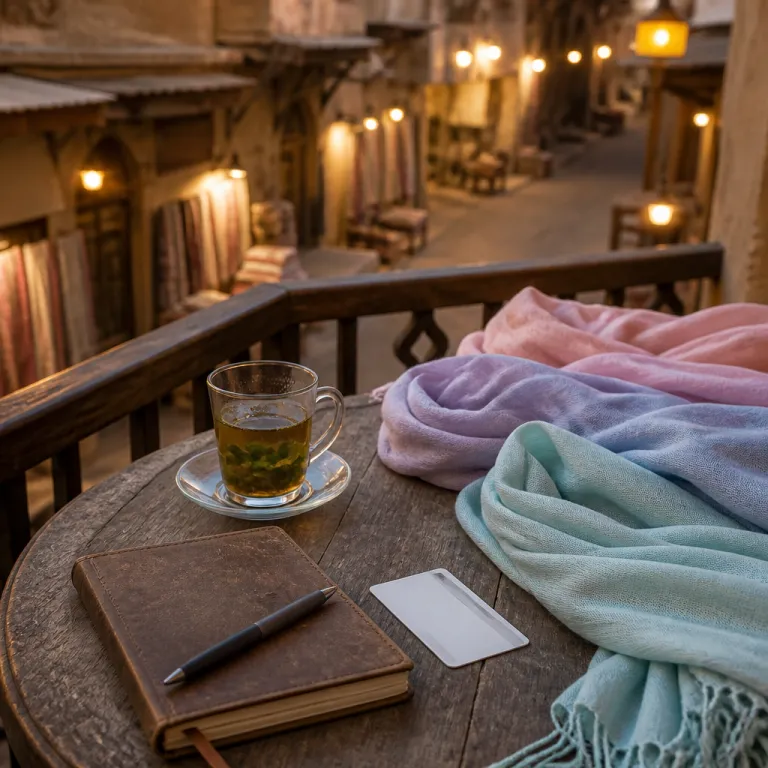
Why your khan el khalili cairo evening guide starts after 4 PM
By late afternoon, the light over Cairo softens and the heat finally loosens its grip. This is the right time to leave your luxury hotel, cross the Nile or downtown traffic, and aim your evening toward the historic heart of Islamic Cairo. As you approach the medieval lanes of the Khan el-Khalili market, the air shifts from car exhaust to cardamom, charcoal and essential oils.
Most concierges will suggest a daytime visit to Khan el-Khalili, yet the bazaar only reveals its best character once the sun dips behind the minarets. From around 4 PM, metal shutters roll up, copper and brass lamps begin to glow, and the first wave of Egyptian families arrives to shop and stroll. Any thoughtful night-time itinerary for this historic souk should treat this hour as the prologue, when you can still see the carved stonework of each mosque and the intricate mashrabiya balconies before darkness turns them into silhouettes.
The market has operated in some form since the late fourteenth century, and today several hundred shops crowd its alleys in a dense, living museum of trade. Local business associations and tourism board briefings in 2023 suggest the wider Khan el-Khalili area now includes roughly 800 to 1,000 individual units, from tiny kiosks to multi-room stores. You are not walking through a staged attraction; you are entering a working Egyptian market where gold jewelry, Egyptian cotton, spices and everyday household goods change hands at every price point. This is why any serious guide for luxury travelers must balance romance with logistics, helping you time your visit precisely between the tour groups and the late night lull.
From a premium hotel in Zamalek or Garden City, plan around 30 to 40 minutes of travel by car to reach Islamic Cairo in the late afternoon, though in peak traffic it can stretch to nearly an hour. As of early 2024, typical one-way fares in a pre-booked private car or reputable ride-hailing service range from about 250 to 400 EGP, depending on distance and time of day. Ask your concierge to arrange a reliable driver who knows the best drop-off point near Hussein Square and Al-Azhar Mosque, usually along the edges of Al-Azhar Street or in front of the main Hussein Mosque entrance. That way you step straight from air-conditioned comfort into the heart of the Khan el-Khalili quarter, without wasting time circling crowded streets.
As the call to prayer echoes from each mosque around Hussein Square, the atmosphere shifts from languid to electric. Strings of colored bulbs flicker on above the bazaar, revealing stalls of traditional Egyptian lanterns, hand-hammered copper trays and shelves of essential oils in glass vials. This is the moment when your evening in Khan el-Khalili truly begins, and when the contrast between your polished hotel lobby and the textured streets of Islamic Cairo feels most exhilarating.
From Nile view suites to hussein square: how to arrive and leave safely
Luxury and premium hotels in Cairo form a loose crescent along the Nile, from high-rise towers in downtown to quieter addresses in Zamalek. If you are reading a Khan el-Khalili Cairo evening guide from a room on a high floor, you may already see the glow of Islamic Cairo on the eastern horizon. That skyline of minarets and domes is your compass for the night.
Ask your concierge to arrange a private car rather than relying on street taxis, especially if you plan to return after 9 PM when traffic patterns change. Drivers who regularly serve five-star hotels know the safest routes to the bazaar and the best drop-off points near Hussein Square, which sits between Al-Azhar Mosque and the main entrance to the khan. This is also the moment to confirm whether you prefer a flexible return time or a fixed pick-up, depending on how deeply you want to explore the market and nearby Muizz Street.
For guests staying in high-rise properties, reading about Cairo’s skyline hotels can help you understand how the city’s districts connect, and a resource such as a detailed guide to Cairo’s high-rise hotels and their views offers useful context. From these towers, Islamic Cairo appears compact, yet on the ground the Khan el-Khalili market is a maze of alleys where it is easy to lose your sense of direction. That is part of the experience, but it also means you should pin your hotel on a map app before you leave and keep a local translation tool ready for quick communication with drivers.
Safety at night in Khan el-Khalili is a frequent concern for first-time visitors, especially solo travelers. The official guidance from major travel advisories and local tourism offices is reassuring: “Is Khan el-Khalili safe at night? Yes, generally safe with usual precautions.” You should still keep valuables close, avoid flashing large amounts of cash when you negotiate a price, and stay on the main arteries of the bazaar if you feel uncomfortable in quieter side alleys.
When you are ready to leave Islamic Cairo, return to a known landmark such as Hussein Square, the Al-Azhar Mosque gate or the edge of Muizz Street to meet your driver. Many visitors agree a pick-up point beside the main Hussein Mosque steps or along the curb of Al-Azhar Street works well, where cars can pause briefly. If you prefer additional reassurance, ask your hotel to book a vetted local operator such as a private car from a five-star concierge desk or a licensed guide affiliated with a reputable Cairo tour company. If you are staying near the airport or have a very late flight, consider pairing your Khan el-Khalili Cairo evening guide with a practical resource on where to sleep near Cairo Airport after a late landing. That way you can enjoy the market until closing time, then retreat to a quiet room without worrying about a long cross-city transfer.
Evening atmosphere in the bazaar: from late afternoon glow to night pulse
Between 4 PM and 6 PM, the Khan el-Khalili market sits in a kind of golden pause. Sunlight still reaches the upper balconies, but the alleys themselves cool into shadow, and you can appreciate the carved stone façades that link this bazaar to the wider fabric of Islamic Cairo. It is an ideal time for photography, when the crowds are manageable and the outlines of each mosque and minaret remain crisp.
By early evening, around 7 PM, your Khan el-Khalili Cairo evening guide shifts from architecture to human theatre. Egyptian families arrive in groups, children weave between stalls, and the calls of vendors selling jewelry, brass lamps, traditional Egyptian galabeyas and Egyptian cotton scarves overlap in a rhythmic chorus. This is when the market feels closest to its medieval roots, a living continuation of ancient Egyptian trade routes filtered through modern Cairo energy.
Hussein Square becomes the social heart of the area, framed by Al-Azhar Mosque on one side and the entrance to the main bazaar on the other. Here you can pause, orient yourself and decide whether to head first toward the denser Khan el-Khalili lanes or to stroll up toward Muizz Street, where some of the best things in Islamic Cairo reveal themselves under careful lighting. The illuminated façades of restored caravanserais and madrasas turn the street into an open-air museum, a striking contrast to the more chaotic energy inside the khan.
For travelers who have already spent a day at the Egyptian Museum or even at a heritage property like the historic hotel near the pyramids, the sensory shift is dramatic. Reading a reflective piece such as a weekend at a grand Cairo hotel with deep history can help you frame this contrast between curated heritage and the raw, unscripted life of the market. In Khan el-Khalili, the past is not behind glass; it is bargaining with you over the price of a hand-hammered tray.
As night deepens toward 9 PM, the tempo gradually eases, though many shops remain open and the smell of grilled meat and shisha smoke thickens the air. This is a comfortable time to visit the bazaar if you prefer a calmer experience, with more space to examine jewelry, textiles and essential oils without constant jostling. The market’s operating rhythm follows a clear pattern supported by local business associations and shopkeepers: “What are the market's operating hours? Typically open from morning until late evening,” with most stalls in the core lanes trading from around 10 AM until roughly 10 or 11 PM.
What to buy, what to skip and how to read the price
A thoughtful Khan el-Khalili Cairo evening guide for hotel guests must go beyond vague shopping lists. In this historic marketplace, the range of goods runs from exquisite handwork to mass-produced souvenirs, and the difference is not always obvious at first glance. Your goal is to focus on items where the bazaar still excels and to avoid those better sourced elsewhere in Cairo or Egypt.
Lanterns and brass work remain among the best things to buy in Khan el-Khalili, especially in the lanes where metalworkers still hammer patterns by hand. Look for slight irregularities in shape and perforation, which signal traditional techniques rather than factory stamping, and do not hesitate to ask the vendor about the origin of the piece. Jewelry is another strength, from heavy silver cuffs inspired by ancient Egyptian motifs to delicate gold pieces, but you should only buy from shops that clearly display weight and karat information and that feel comfortable answering detailed questions.
Textiles require more discernment, particularly when it comes to Egyptian cotton. Many stalls use the phrase loosely, so if you want genuine high thread count Egyptian cotton sheets or robes, you may be better served by specialist shops in other parts of Cairo or by your hotel’s retail arcade. In Khan el-Khalili, consider instead traditional Egyptian scarves, hand-embroidered cushion covers and kilim rugs, where the value lies in pattern and color rather than in a specific fiber claim.
Spices, essential oils and perfumed resins are atmospheric purchases, and the bazaar remains a strong place to explore these senses. Choose stalls where the products are stored in glass rather than plastic, and where the vendor is willing to let you compare different grades at different price levels. When you buy classic khan-style souvenirs such as small statues or papyrus, remember that these are usually mass-produced; treat them as mementos rather than investments, and keep your bargaining light.
Haggling is part of the experience in any Egyptian market, and Khan el-Khalili is no exception. Start by asking the price with a smile, counter with roughly half if the initial figure feels inflated, and aim to settle somewhere in the middle, always keeping the exchange friendly. For example, if a lantern is quoted at 1,000 EGP, you might respond with 450 to 500 EGP and expect to agree around 650 to 750 EGP if both sides are flexible. Credit cards are slowly appearing, but the practical advice remains clear as of 2024: “Are credit cards accepted? Mostly cash; some shops accept cards.”
Cafés, culture and when to go solo or with a guide
No serious Khan el-Khalili Cairo evening guide would omit the legendary Fishawy Café, a café that has served guests in the same alley for generations. Tucked just off Hussein Square, this open-fronted institution is where Egyptian families, students and travelers share tables under aging mirrors and hanging lamps. Order a strong Turkish coffee, a mint tea or a fresh hibiscus drink, then sit long enough to feel the rhythm of the market pass by.
Fishawy Café is also a place where literature and daily life intersect, thanks in part to its association with Nobel laureate Naguib Mahfouz. While Mahfouz has his own namesake restaurant nearby, the café remains the more democratic space, where the price of entry is simply the cost of a drink and the time you are willing to spend watching Cairo unfold. For many travelers, this pause becomes the emotional center of their visit to the khan, a moment of stillness amid the bazaar’s constant motion.
Beyond cafés, the cultural frame of Khan el-Khalili extends into the surrounding streets of Islamic Cairo, especially Muizz Street with its concentration of restored monuments. Walking here at night, between illuminated mosque façades and the outlines of ancient Egyptian inspired motifs carved into stone, feels like moving through a layered museum without walls. This is where the connection between the Egyptian Museum’s artifacts and the living city becomes tangible, as you stand between Al-Azhar Mosque, historic madrasas and the commercial arteries of the Khan el-Khalili bazaar.
Whether to explore solo or with a guide depends on your comfort level and your appetite for context. Confident travelers who enjoy getting slightly lost may prefer to wander the market and its shops alone, using translation apps and local maps, while those who want deeper historical insight into Islamic Cairo’s architecture might benefit from a structured walking tour. The local ecosystem supports both approaches, with walking tours, self-guided exploration and partnerships between hotels, local guides and tour companies all designed to enhance the night market experience.
For guests staying in luxury hotels, concierges can often arrange private guides who meet you in the lobby and stay with you until you are safely back, which is particularly reassuring for solo travelers or first-time visitors to Egypt. Some visitors ask their hotel to book a licensed Egyptologist guide for a combined Muizz Street and Khan el-Khalili walk, while others rely on long-standing concierge desks at major Nile-front properties to recommend trusted drivers and escorts. Whether you choose a guide or not, remember the core advice shared with all visitors: wear comfortable shoes, keep valuables secure and be prepared to bargain. In return, Khan el-Khalili offers a memorable cultural experience that complements the calm of your hotel suite and rounds out any serious travel guide to Cairo’s most atmospheric market at night.
FAQ
Is Khan el-Khalili safe to visit at night for solo travelers?
Khan el-Khalili is generally safe at night, including for solo travelers who follow normal urban precautions. Stick to the main arteries around Hussein Square, Al-Azhar Mosque and the busiest bazaar lanes, and avoid very quiet side alleys if you feel unsure. Keep valuables close, use a trusted driver arranged by your hotel and agree a clear meeting point for your return.
What is the best time in the evening to visit Khan el-Khalili?
The most atmospheric window runs from late afternoon into early night, roughly between 5 PM and 9 PM. Arriving around 4 PM lets you see the architecture of Islamic Cairo in daylight before the lights and crowds build. By 7 PM the market is at full energy, while after 9 PM the pace slows and some shops begin to close.
How long should I plan to spend in the market and nearby streets?
Most hotel guests find that two to three hours is enough for a first visit, including time for shopping, a drink at Fishawy Café and a short walk along Muizz Street. If you are particularly interested in jewelry, brass work or traditional Egyptian textiles, you may want closer to four hours. Factor in at least 30 minutes each way for travel from central Cairo hotels.
Can I combine Khan el-Khalili with visits to other cultural sites in Cairo?
Yes, many travelers spend the day at the Egyptian Museum or at major mosques and then head to Khan el-Khalili in the evening. The market’s location in Islamic Cairo makes it easy to pair with Al-Azhar Mosque and the monuments of Muizz Street. If you prefer a slower pace, you can dedicate one evening solely to the bazaar and its cafés, then visit museums and other landmarks on separate days.
Do I need a guide, or is it easy to navigate alone?
The bazaar is easy enough to navigate alone if you are comfortable with crowds and occasional wrong turns, especially when using a map app. A licensed guide, however, can add depth by explaining the history of Islamic Cairo, pointing out the best quality shops and helping with bargaining. Many luxury hotels in Cairo can arrange private guides who tailor the evening to your interests and ensure a smooth return to your room.