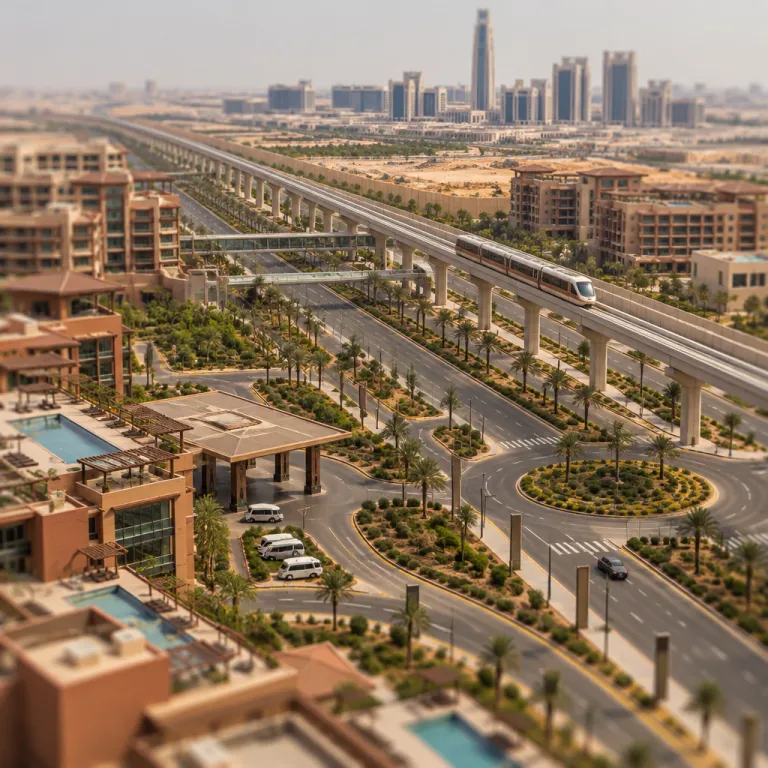
Where the New Administrative Capital sits in relation to Cairo’s hotel heartlands
The New Administrative Capital rises from the desert about 45 kilometres east of central Cairo. This planned capital city stretches beyond the traditional edges of Greater Cairo, pushing past the ring road and out towards the east Nile desert plateau. For luxury travellers, that distance will shape every decision about where to sleep, meet and unwind.
From the Nile corniche hotels in downtown Cairo, the drive to the New Administrative Capital usually takes 45 to 75 minutes. Traffic on the ring road and the newer eastbound road corridors will decide whether your car glides or crawls, especially at peak business hours. The same applies if you are coming from October City or the capital October corridor, where some executives now split their week between west and east.
Cairo International Airport sits roughly midway between the historic city and the New Administrative Capital. A direct airport transfer to a NAC hotel can take 30 to 50 minutes, depending on which road your driver chooses and how the construction zones are behaving that day. If your itinerary mixes meetings in Nasr City, downtown and the administrative capital, you will feel the sprawl of Greater Cairo more acutely than a classic Nile based visitor.
The new administrative capital Cairo transport monorail: what it promises and what exists today
The phrase new administrative capital Cairo transport monorail appears in every government briefing and every hotel sales pitch. On paper, the Cairo monorail will be a high capacity rapid transit system that links Nasr City and eastern Cairo directly with the New Administrative Capital. For guests, the promise is simple ; step from a hotel near a station and glide above the traffic to your meeting.
The monorail project is being delivered by a consortium including Alstom and Arab Contractors, using the Alstom Innovia monorail technology that has been deployed in other global cities. Official plans describe two October lines in the wider capital monorail network, one towards October City in the west and one towards the administrative capital in the east. Together, these monorail administrative corridors are designed to complement the Cairo Metro and other transit systems, not replace them.
In practice, visitors need to treat the new administrative capital Cairo transport monorail as a project in phased construction rather than a fully operational solution. Sections of track, stations and depot infrastructure are visible along major road axes, and hotel concierges will point out the emerging nile monorail style viaducts. Until the full system, including all planned stations, is reliably running, most hotel guests will still rely on private cars, hotel limousines and premium ride hailing for day to day transport.
Roads, ring roads and realistic transfer times for hotel guests
For now, the real backbone of new administrative capital Cairo transport monorail access is not steel and concrete beams but asphalt. A web of new road links connects the administrative capital to the existing ring road, to Nasr City and to the east Nile desert highways. These corridors shorten the distance on the map, but Cairo’s famously elastic traffic means transfer times will always need a generous buffer.
From a Nile view hotel in central Cairo, your driver will usually head towards Nasr City, then pick up one of the newer road spurs that feed the capital city project. On a good day, the drive feels like a straight shot, with the skyline of the administrative capital rising quickly from the horizon. On a bad day, bottlenecks near interchanges or ongoing construction around future monorail stations can add 30 minutes or more.
Guests staying in October City or along the capital October corridor face a different geometry. They may cross much of Greater Cairo west to east, touching the ring road and sometimes skirting the Cairo Metro feeder roads before turning towards the desert. In these cases, the future monorail October connection and the wider capital monorail system could eventually rebalance where high end travellers choose to base themselves.
Monorail, metro and the wider Cairo transit ecosystem for luxury travellers
Understanding how the new administrative capital Cairo transport monorail fits into the wider network helps you plan hotel choices. Cairo Metro remains the workhorse of urban transit, moving millions daily beneath the city, while the planned nile monorail style lines will skim above arterial roads. Together with buses, taxis and private cars, they form a layered system that luxury travellers can tap into selectively.
The eastern monorail project is designed to start in Nasr City, then run through key residential and commercial districts before reaching the administrative capital. Each station along this innovia monorail corridor is planned as a node where other modes of transport, including feeder buses and park and ride facilities, will converge. For hotel developers, proximity to a future station is already a selling point, even while construction cranes still dominate the skyline.
On the western side, the October lines are intended to link October City and surrounding suburbs with the rest of Greater Cairo through another monorail administrative spine. When both east and west corridors are complete, the capital monorail network should make cross city journeys more predictable for business travellers. Until then, the Cairo monorail remains a partially realised promise, and the Cairo Metro plus chauffeured cars will continue to carry most premium guests between meetings, galleries and Nile side dinners.
Should you base yourself in the New Administrative Capital or by the Nile ?
Every executive weighing a stay in the New Administrative Capital versus central Cairo is really asking about trade offs. On one side, you have gleaming new hotels, generous room sizes and purpose built meeting spaces that sit close to ministries, corporate headquarters and the heart of the administrative capital project. On the other, you have the layered soul of the old city, where a short walk from a Nile hotel leads to cafés, galleries and the kind of street life that makes Egypt unforgettable.
If most of your meetings sit within the capital city core, staying there will cut daily road time dramatically. You will move between hotel, office and official venues in minutes, often on wide new boulevards that feel a world away from the tight streets of Nasr City or downtown. In this scenario, the future new administrative capital Cairo transport monorail becomes a bonus for occasional trips back towards Greater Cairo rather than a daily necessity.
Leisure focused travellers, or business guests extending their stay, usually benefit from a Nile based address. From there, you can reach the Egyptian Museum, Islamic Cairo and the contemporary art galleries that we map in detail in our guide to Cairo’s contemporary art scene worth leaving the hotel for. For these guests, the administrative capital is better treated as a targeted day trip by car, with the evolving monorail project watched with interest rather than relied upon.
Architectural marvels and how transport shapes your hotel experience
The New Administrative Capital is not just a political project ; it is an architectural statement. Government complexes, cultural venues and new luxury hotels rise in sharp lines of glass and stone, designed to signal a future facing Egypt. Many of these properties orient themselves towards planned monorail stations and major road junctions, turning transport access into a core part of their identity.
Some hotel lobbies frame views of the elevated monorail administrative track, treating the Cairo monorail as a visual motif as much as a transit promise. Others lean into the desert horizon, using distance from the dense city as a luxury in itself, while still marketing easy access via the ring road and future rapid transit links. In both cases, the new administrative capital Cairo transport monorail narrative becomes part of the sales language, even before the full system is operational.
By contrast, Nile side palace conversions and contemporary towers in central Cairo draw their power from proximity. Step outside and you are in the thick of Greater Cairo, with the Cairo Metro, taxis and ride hailing all within minutes. For travellers who care as much about the coffeehouse in Khan el Khalili as the boardroom in the capital city, this immediate urban fabric often outweighs the appeal of being next door to a future Alstom Innovia station.
Practical booking advice for business leisure travellers
When you book through a luxury and premium hotel platform focused on Cairo, treat transport as a core filter, not an afterthought. Map your meetings across the administrative capital, Nasr City, October City and central Cairo, then calculate how many hours you are willing to spend on the road each day. The new administrative capital Cairo transport monorail may eventually compress those hours, but for now, your car and driver will still do most of the work.
If your schedule is heavily weighted towards the administrative capital, choose a hotel there and plan one or two focused leisure days in the old city. Arrange a car to take you along the ring road early, then spend the day between museums, markets and dinner on the Nile before returning to the capital October corridor at night. If your meetings are scattered across Greater Cairo, a central Nile base with strong concierge support for transfers to the capital city and October lines area can be more efficient.
Ask your hotel directly about current monorail project milestones, nearby stations under construction and realistic transfer times at different hours. Properties that engage closely with the evolving Cairo monorail and wider transport system tend to offer better on the ground advice. Over time, as more innovia monorail segments open and Alstom Innovia trains begin regular service, the balance between road and rail will shift, and with it, the smartest places for high end travellers to stay.
Key figures on access to the New Administrative Capital
- Central Cairo to the New Administrative Capital is roughly 45 kilometres by road, which typically translates to 45 to 75 minutes of travel depending on traffic and route.
- Cairo International Airport sits about 25 to 35 kilometres from many New Administrative Capital hotel zones, with transfer times usually ranging from 30 to 50 minutes by private car.
- The planned Cairo monorail network is designed around two main corridors, one towards the New Administrative Capital and one towards October City, together spanning several dozen kilometres of elevated track.
- Cairo Metro currently operates multiple lines across Greater Cairo, carrying several million passengers per day and forming the backbone of mass transit that the capital monorail system is intended to complement.
- The ring road encircling Greater Cairo stretches for more than 100 kilometres, and new spurs towards the administrative capital have been built to shorten cross city journeys for both private and commercial traffic.
FAQ about reaching the New Administrative Capital and choosing a hotel base
How long does it really take to reach the New Administrative Capital from central Cairo ?
Most travellers should plan for 45 to 75 minutes by private car between central Nile side hotels and the New Administrative Capital. The exact duration depends on time of day, ring road congestion and any construction near key junctions. Leaving earlier in the morning and avoiding late afternoon peaks usually yields the most predictable journeys.
Is the new administrative capital Cairo transport monorail already operating for visitors ?
The Cairo monorail is an active construction project, with visible infrastructure and test segments, but not yet a fully reliable option for everyday hotel guests. Travellers should confirm the latest operational status with their hotel concierge or a trusted local contact before planning around it. For now, private cars, hotel limousines and premium ride hailing remain the primary modes for reaching the administrative capital.
Should business travellers stay in the New Administrative Capital or by the Nile ?
If most meetings are concentrated in the New Administrative Capital, staying there usually reduces daily travel time significantly. Guests whose agendas span Nasr City, October City and downtown Cairo often find a central Nile base more efficient, even with longer single trips to the administrative capital. The choice comes down to whether you prioritise proximity to ministries and corporate offices or immersion in the historic city.
Will the monorail replace the need for private cars for luxury travellers ?
The planned capital monorail system is designed to complement, not replace, existing transport, including the Cairo Metro and road network. Even once the innovia monorail lines are fully operational, many high end travellers will still use private cars for door to door comfort and flexibility. The monorail will be most useful for predictable, corridor based journeys between major hubs.
How should I factor transport into my Cairo hotel booking strategy ?
Start by mapping your key meetings and leisure priorities across Greater Cairo and the New Administrative Capital. Then choose a hotel that minimises your longest daily commute, whether that is in the administrative capital, central Cairo or near October City. Finally, speak directly with the property about current road conditions, monorail project progress and realistic transfer times at different hours.