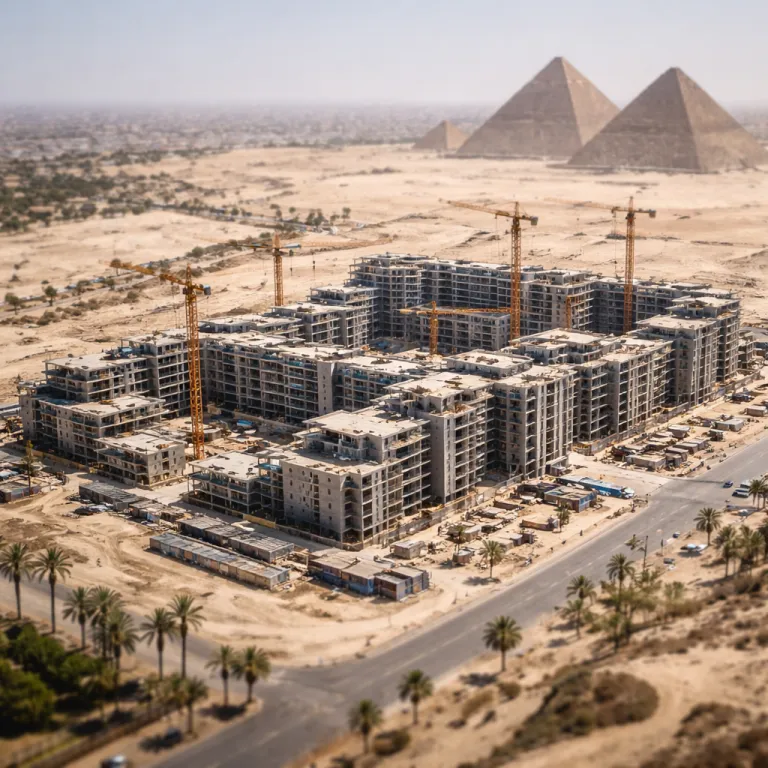
Giza plateau hotel expansion reshapes where luxury travelers stay
The scale of the Giza Plateau hotel expansion is unprecedented for Egypt and will directly affect how luxury travelers plan a stay near the pyramids. Over the next three to five years, government-backed projects and private developers are expected to add roughly 20,000 to 25,000 new hotel rooms around Giza, according to 2023 statements from Egypt’s Ministry of Tourism and Antiquities and coverage in Daily News Egypt (June and October 2023). This will turn what was once a sparse strip of hotels into a full hospitality district anchored by the Grand Egyptian Museum. For anyone booking a premium hotel room in Cairo, this shift means that a view of the Giza pyramids will move from rare privilege to near standard, especially in the upper-tier hotels clustered between the museum and the plateau.
The Egyptian government is steering this Giza Plateau hotel expansion to support a projected tourism boom, with Daily News Egypt reporting expectations of up to 30 million tourist arrivals annually by the end of the decade, a target frequently cited in official tourism strategies and Egypt Vision 2030 documents. Accor Hotels is preparing the Sofitel Legend Pyramids, Sonesta International Hotels Corporation is advancing a Royal Sonesta Giza, and ALDAU Development is working on hotels integrated with the Grand Egyptian Museum, often referred to as the GEM. These new hotels in Giza will sit within a wider Egyptian tourism strategy that links Cairo, the Red Sea resorts, and the Suez Canal corridor into a single global destination for both leisure and business travelers.
For guests, the practical impact is clear: the best pyramid-facing hotel room categories will multiply, but so will the need to read floor plans and room descriptions carefully. A Giza hotel that once had only a handful of direct pyramids Giza views will soon compete with neighbors offering entire façades oriented toward the Giza pyramids and the museum GEM complex. As this news filters through international tourism channels, early bookers will likely secure introductory rates that undercut long-established Cairo luxury hotels, especially for stays timed around the phased opening of the Grand Egyptian Museum and its full King Tutankhamun collection. For example, soft-opening offers in Egypt often start 20–30% below long-term rack rates, a pattern that is likely to repeat in Giza.
From archaeological edge to resort ecosystem around the grand Egyptian Museum
The area between the Grand Egyptian Museum and the Giza Plateau is being master planned as a resort-style corridor, and that will change how solo explorers structure a Cairo itinerary. Where travelers once split nights between central Cairo and a night or two near the pyramids, the emerging Giza Plateau hotel expansion makes it realistic to base entirely in Giza for a culture-heavy stay, then connect onward to the Red Sea or even to Upper Egypt without sacrificing comfort. Triumph Pyramids Hotel, already in development with both hospitality and residential components and flagged in 2022–2023 project announcements, signals how developers see long-term demand for extended stays with direct sightlines to the pyramids and the Grand Egyptian Museum complex.
For context, the Grand Egyptian Museum is described officially as “a new museum near Giza Plateau showcasing Egypt's artifacts.” This single institution will consolidate more than 50,000 pieces, including the complete Tutankhamun collection, and will function as a cultural magnet for both Egyptian visitors and international guests. As hotel projects rise around it, the Giza Plateau will feel less like an isolated archaeological zone and more like a mixed-use district where tourism, business meetings, and contemporary Egyptian culture intersect in cafés, galleries, and hotel lobbies. In practical terms, that means a visitor could spend a morning inside the Egyptian Museum galleries at the GEM, an afternoon in a hotel co-working lounge, and an evening in a rooftop bar overlooking the Giza pyramids without ever crossing the Nile.
Travelers weighing central Cairo versus Giza should think in terms of trip purpose rather than simple distance on a map. If your priority is late-night dining in Zamalek, meetings in downtown business towers, and quick access to the Egyptian Museum in Tahrir until all collections move, then a Nile-side address still makes sense and you can review our guide to new Cairo hotels worth booking early. If your focus is sunrise over the pyramids Giza, repeated visits to the museum GEM, and minimal time in traffic, the new Giza hotels will offer a more efficient base, especially once the full Giza Plateau hotel expansion is online and the surrounding transport links to Cairo International Airport and the wider Egypt tourism network are fully calibrated.
Pricing, politics, and how to book smart during the Giza plateau build out
As capacity around the Giza Plateau increases, pricing dynamics will shift in ways that favor informed travelers who understand Egypt’s tourism cycles. In the early phases of the Giza Plateau hotel expansion, expect competitive opening offers from new hotels eager to build market share, particularly in shoulder seasons when international arrivals soften. Over time, once the Grand Egyptian Museum and surrounding properties reach steady occupancy, premium pyramids Giza views will likely command a clear rate ladder, while non-view categories in the same hotel can remain surprisingly accessible. A traveler visiting in a quieter month such as late May, for instance, might find that a standard hotel room with partial Giza pyramids views costs little more than an inner-courtyard room in central Cairo.
Egyptian politics and regional relations, including the sensitive Egypt Sudan border and security considerations along the Suez Canal, always influence how global tourism perceives Cairo, but the long-term investment around Giza signals confidence from both the Egyptian government and international hotel groups. The official FAQ for the Grand Egyptian Museum already frames the rationale clearly with the answer that new hotels are being built near Giza Plateau “to accommodate increased tourists from the Grand Egyptian Museum opening.” For travelers, that means a more resilient hospitality ecosystem where temporary dips in demand can translate into attractive rates without compromising on service or safety standards, even when regional news cycles briefly unsettle international sentiment.
Solo travelers should approach booking with the same precision they would apply to any major global city, comparing central Cairo and Giza options using detailed maps, room-type diagrams, and verified guest photos. Our in-depth overview of the best luxury hotels in Cairo remains a useful starting point, and our analysis of Egypt’s record hotel pipeline shows how Giza fits into a nationwide expansion that also touches the Red Sea coast. Book early for peak museum GEM periods, read cancellation policies carefully, and remember that in this new Giza Plateau era, the most memorable hotel room may be the one that balances a measured view of the pyramids with easy access to the rest of Cairo’s layered culture and wider Egypt tourism circuits.
Key practical notes for travelers tracking the Giza plateau hotel expansion
The Giza Plateau sits on the western edge of greater Cairo, roughly 15 kilometres from Tahrir Square, and the new hotels will cluster along the main spine between the plateau and the Grand Egyptian Museum. Many of these hotels in Giza will use modern architectural designs and sustainable building practices, aiming to integrate luxury amenities with the surrounding Egyptian heritage rather than overshadowing it. For travelers, that should translate into better soundproofing against traffic, more thoughtful landscaping, and hotel room layouts that frame the Giza pyramids without sacrificing privacy or comfort, a notable upgrade from some of the older properties that defined the area’s first wave of tourism.
While the focus is firmly on tourism, the Giza Plateau hotel expansion also has a business dimension, with meeting spaces and conference facilities designed to attract regional events that link Cairo with hubs along the Suez Canal and the Red Sea. This reflects a broader Egyptian strategy to position Cairo as a global gateway where culture, commerce, and tourism share the same urban fabric. For solo explorers, that mix can be an advantage, bringing higher service standards, more diverse dining, and reliable transport options around the Giza Plateau at all hours, whether you are in town for a short business trip or a longer cultural immersion.
Travel news from Egypt will continue to track milestones such as the opening of the Royal Sonesta Giza and the Sofitel Legend Pyramids, so it is worth monitoring official tourism channels when planning. At the same time, local heritage advocates and urban planners have raised questions about infrastructure strain, skyline changes, and how new hotels will share space with existing communities around the Giza pyramids, concerns that underline the need for careful regulation as tourism grows. Remember that projected visitor numbers to the Egyptian Museum collections at the GEM are high, so aligning your stay with less intense periods can improve both price and experience. Whether you are crossing from Egypt Sudan overland or flying in from another international hub, treat Giza not as a quick photo stop but as a fully fledged district where the right hotel choice shapes your entire Cairo narrative and connects you to the wider story of Egyptian culture, politics, and international tourism.